Signal strength: HIGH
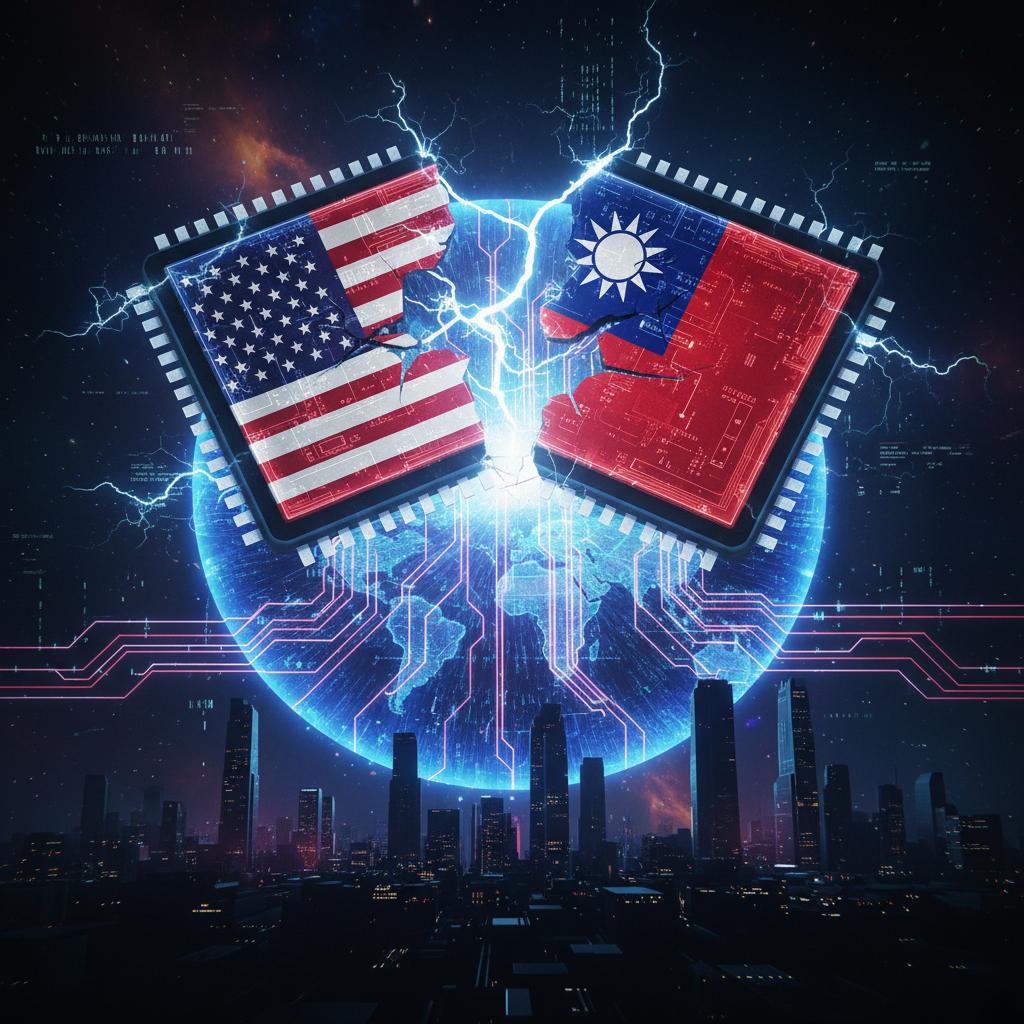
The afternoon's dominant story is unambiguous: the United States just made its most aggressive move yet to reshore semiconductor manufacturing. Demanding 40% of Taiwan's chip output relocate to America isn't a negotiating tactic — it's a geopolitical ultimatum dressed in trade language. If this materializes, it represents the single largest forced restructuring of a global supply chain since World War II.
The timing is deliberate. With Alphabet issuing 100-year bonds to fund data center construction, the administration sees an opening: the AI buildout needs chips, the US wants the chips made domestically, and Taiwan needs American security guarantees. The leverage equation is stark. TSMC's Arizona fabs are already behind schedule and over budget — now imagine scaling that to 40% of Taiwan's output. The engineering challenges alone are generational.
On the business side, the OpenAI story arc from this morning continues to develop. Altman is simultaneously claiming 10%+ monthly growth, assembling a $100B funding round, promising a new model this week, AND rolling out ads in ChatGPT. That last move is telling — if growth is truly that explosive, why introduce ads that Anthropic just publicly humiliated you for? The answer is probably that revenue growth and user growth are different things, and the path to profitability requires every revenue stream they can find.
Tencent's 2-bit quantized LLM deserves attention beyond the headline. This is China systematically solving the "less compute, same performance" problem. DeepSeek showed it with training efficiency. Now Tencent is showing it with inference compression. If US export controls were designed to slow China's AI progress, the effect has been to redirect Chinese labs toward efficiency innovations that may ultimately prove more valuable than brute-force scaling.
Pony AI and Toyota quietly reaching commercial production of autonomous vehicles is the kind of story that gets buried under bigger headlines but matters enormously. China's AV industry just crossed the manufacturing Rubicon. The US has Waymo operating robotaxis in a handful of cities. China is building the cars.
Key thread: The semiconductor reshoring demand connects directly to this morning's $2 trillion software repricing. The US government is betting that whoever controls chip manufacturing controls the AI future. The 100-year bond signals that at least one major tech company agrees — and is willing to mortgage the 22nd century to prove it. We are watching the birth of a new industrial policy, and it's being built on silicon.