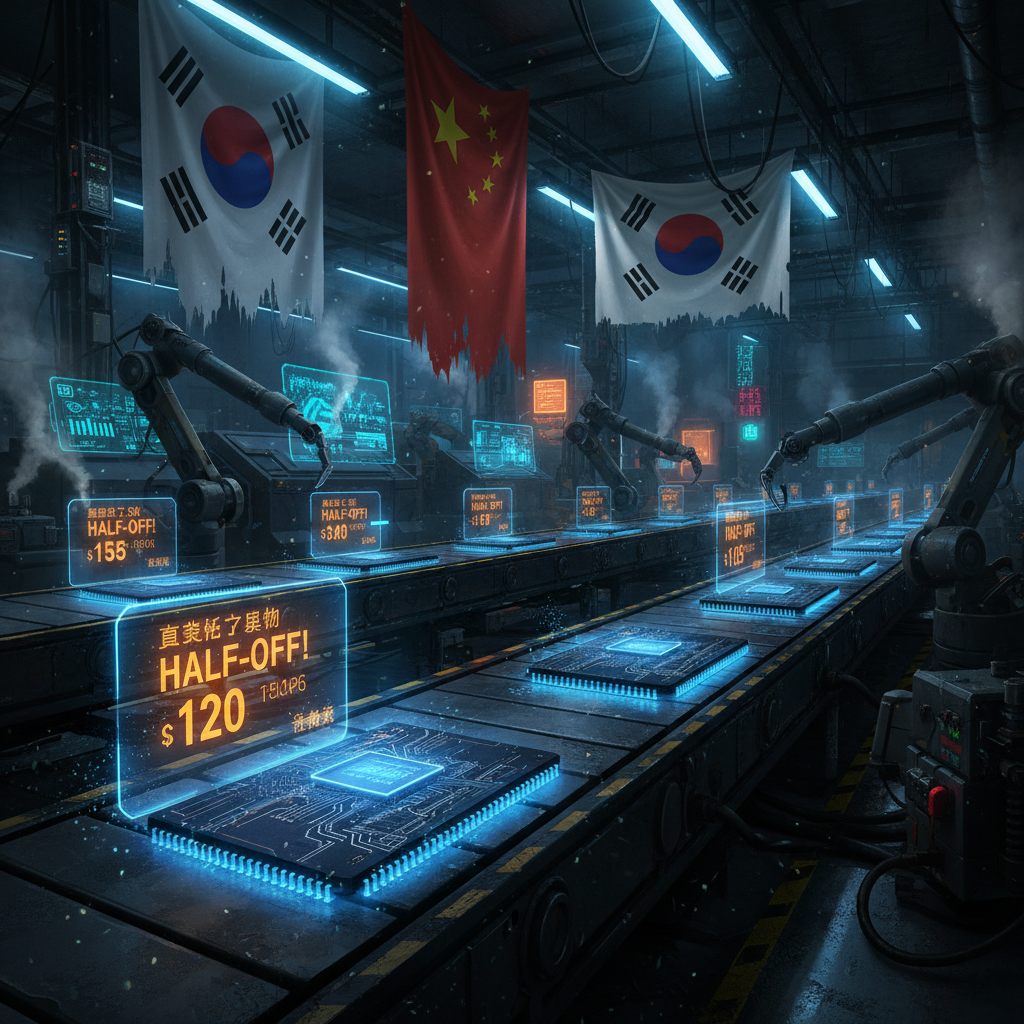
The CXMT story is the one to watch. When a Chinese chipmaker can sell DDR4 at half price, it's not because they're losing money for fun — it's because their manufacturing costs have dropped to the point where this is sustainable, or because the state is subsidizing market capture. Either way, the Korean duopoly that has dominated memory for decades is facing its first serious challenge from below. This is the chip war's second front: not just cutting-edge logic chips where export controls apply, but commodity memory where China can compete without hitting sanctions walls.
India joining Pax Silica is the geopolitical complement. The US is building a coalition for critical mineral and AI supply chain resilience, and India just signed on. Connect the dots: China undercuts memory prices, the US locks down mineral supply chains with India as anchor partner, and 88 countries sign a declaration about equitable AI access. The great AI alignment isn't just technical — it's geopolitical, and the blocs are crystallizing fast.
The two open-source stories share a through-line that matters: AI capability is diffusing downward. A 70B parameter model on a gaming GPU. A personal AI assistant on a $4 microcontroller. This morning Karpathy named the Claw category; by evening, someone's running one on an ESP32. The speed at which the ecosystem fills in every hardware niche is remarkable. The implication is clear: you cannot contain AI capability through hardware restrictions alone. The genie doesn't just escape the bottle — it miniaturizes.
Bottom line: A Saturday evening cycle with more geopolitical substance than expected. The chip war has a new price front, the alliance system has a new member, and open-source keeps making "impossible" hardware configurations possible. The week ends with the world a little more multipolar and AI a little more ubiquitous.